


Rethinking the automotive configuration experience in a fast changing world
Introduction
Over the course of a year, acting as both a hands-on designer and team lead, I steered the project, ensuring alignment with Toyota's brand ethos while emphasizing a user-first approach. The collaborative efforts resulted in a finely-tuned online configurator, setting a new benchmark for intuitive experiences within the automotive industry.
Challenge
Toyota’s existing configuration journey was functional, but not expressive. With evolving customer expectations and rapidly shifting automotive standards, the experience needed to feel clearer, more inspiring, and more aligned with modern browsing behaviors. At the same time, the solution had to support thousands of configurations, unique models, and different regional market requirements, all while staying true to Toyota’s brand identity.
Another key challenge was collaboration. Product designers, content teams, product owners, external partners, and governance teams all had a stake in the outcome. My role was not only to design but to lead the alignment — ensuring that decisions were grounded in user needs, not internal assumptions. This required frequent communication, structured feedback loops, and a shared understanding of what “good” meant for this product.
Process
We began with market and competitor research to understand where the automotive industry was heading and where user expectations were shifting. This was followed by user testing across different markets, focusing on the clarity of the journey, the emotional feel of the experience, and how users compared trims, features, and price points while building confidence in their choices.
Design iterations played a major role, we prototyped early and often. Each round of testing helped uncover small but meaningful friction points, many of which influenced layout, hierarchy, comparison patterns, and the sequencing of decisions. Throughout, I facilitated workshops and design reviews to ensure alignment across teams and stakeholders, keeping momentum while reducing ambiguity.
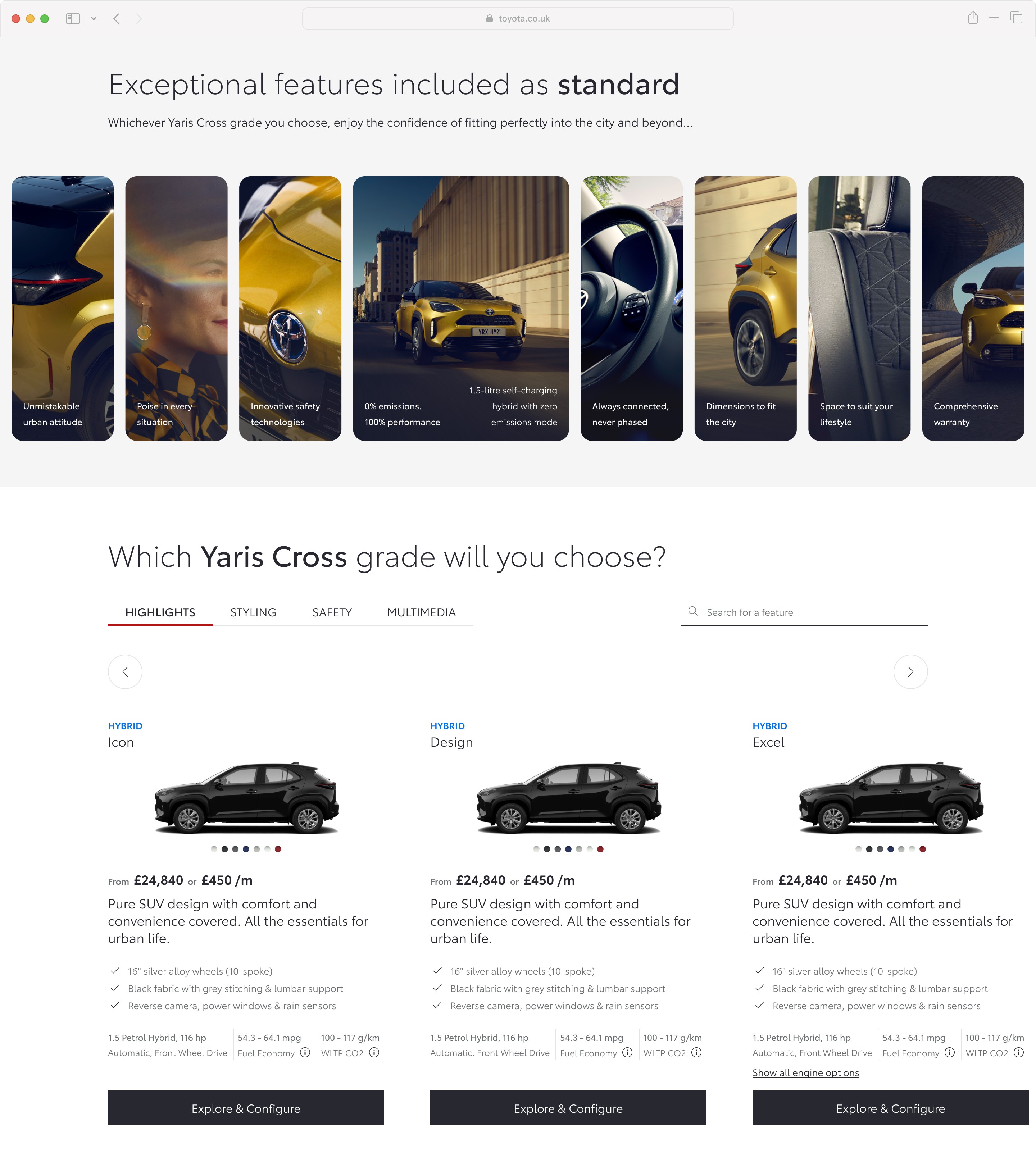
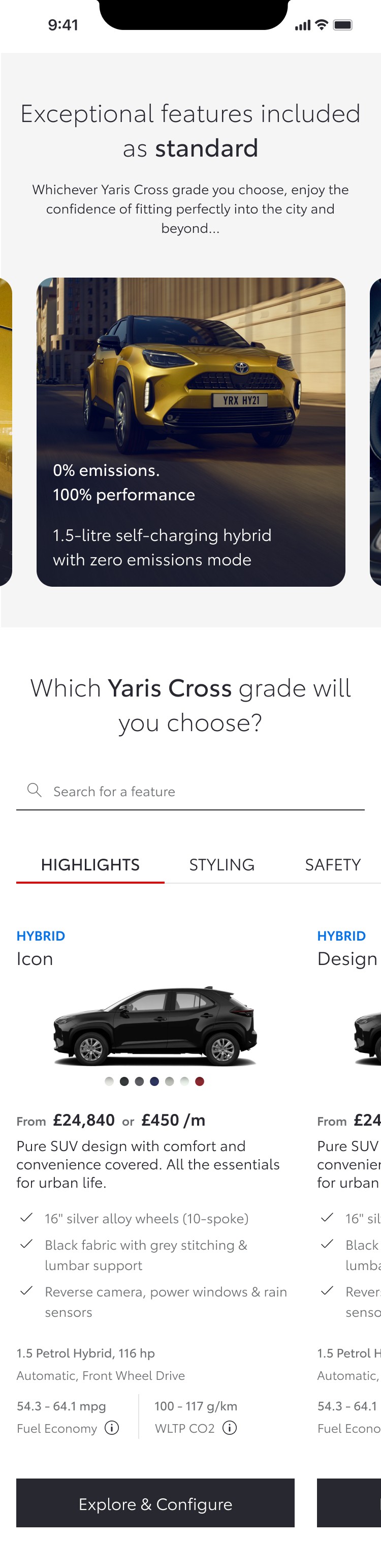
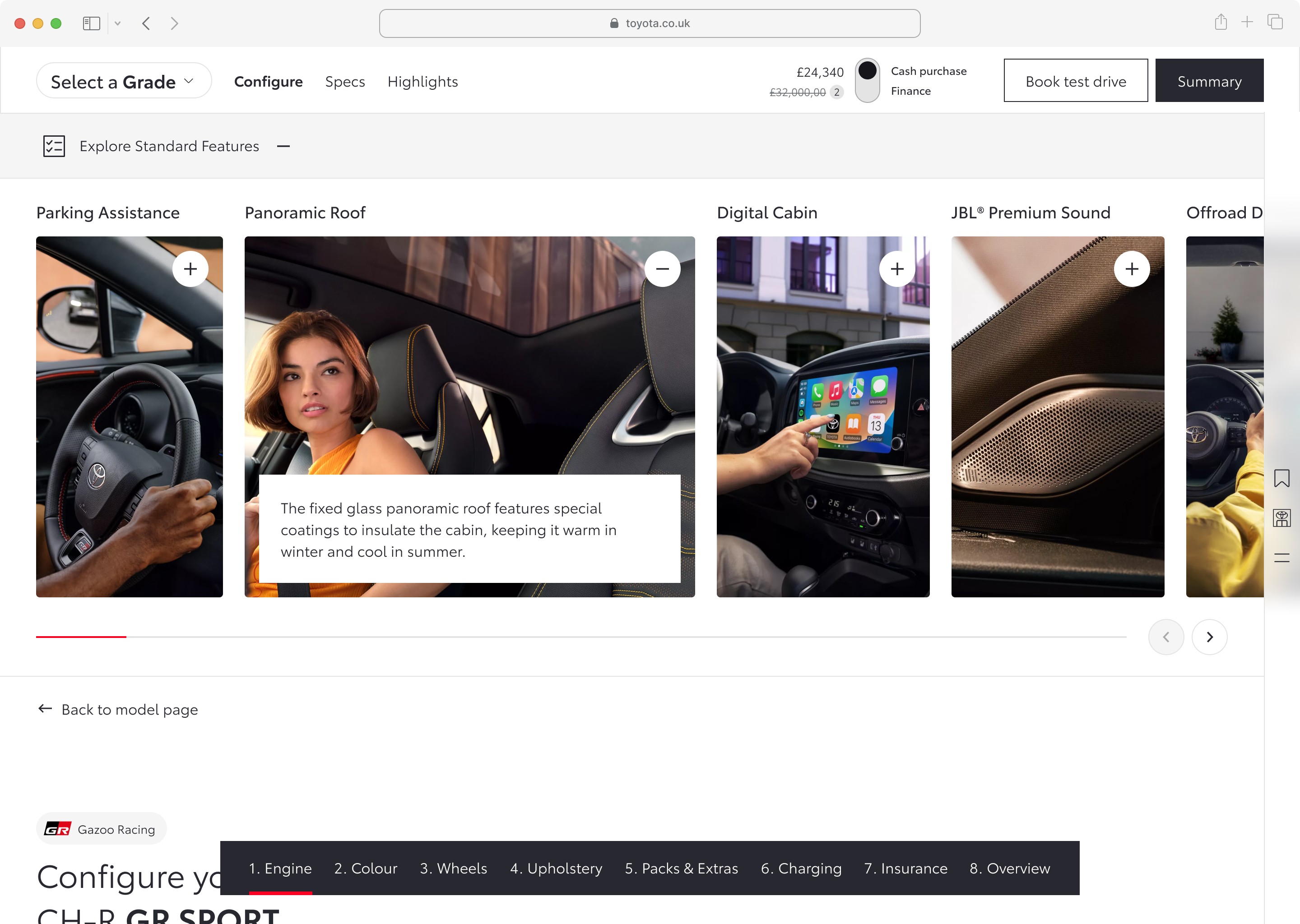
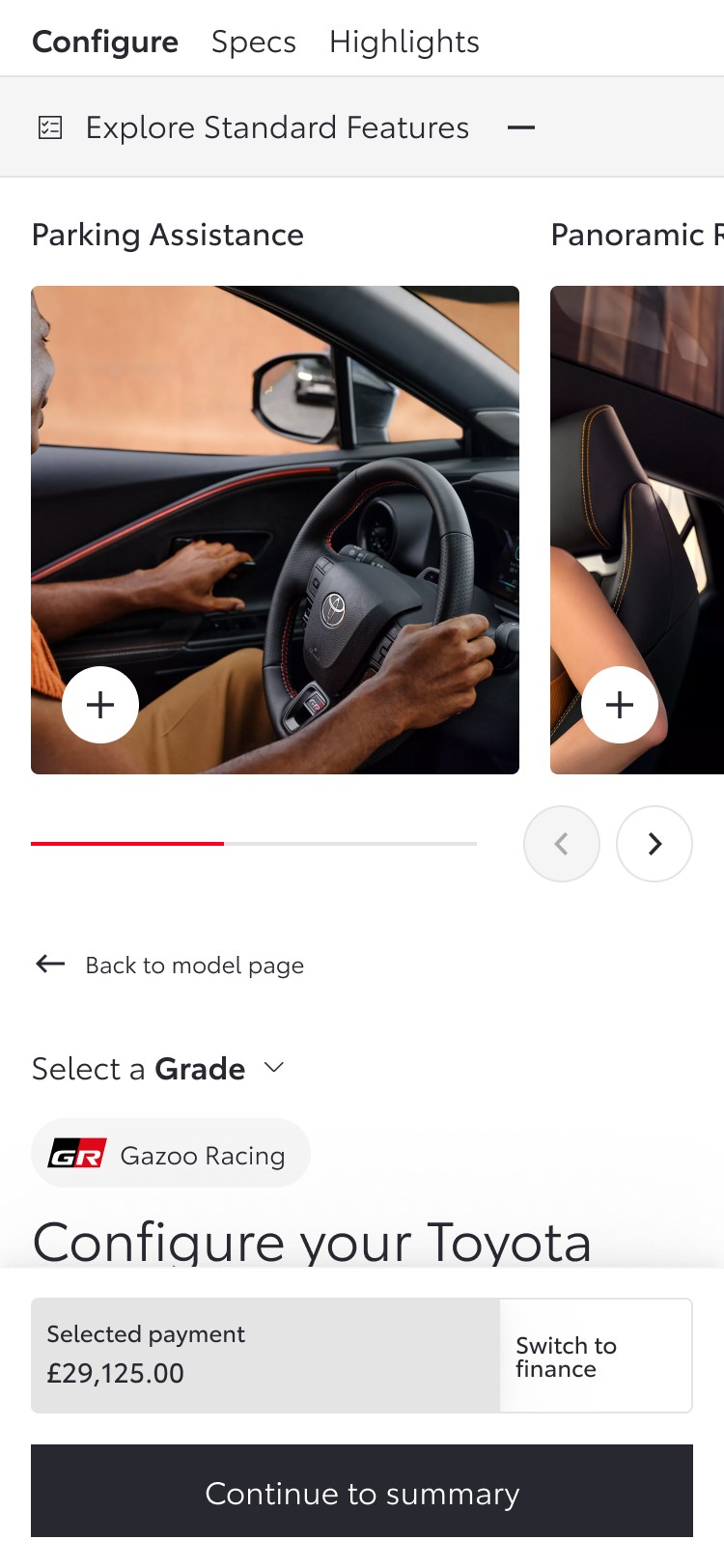
Solution
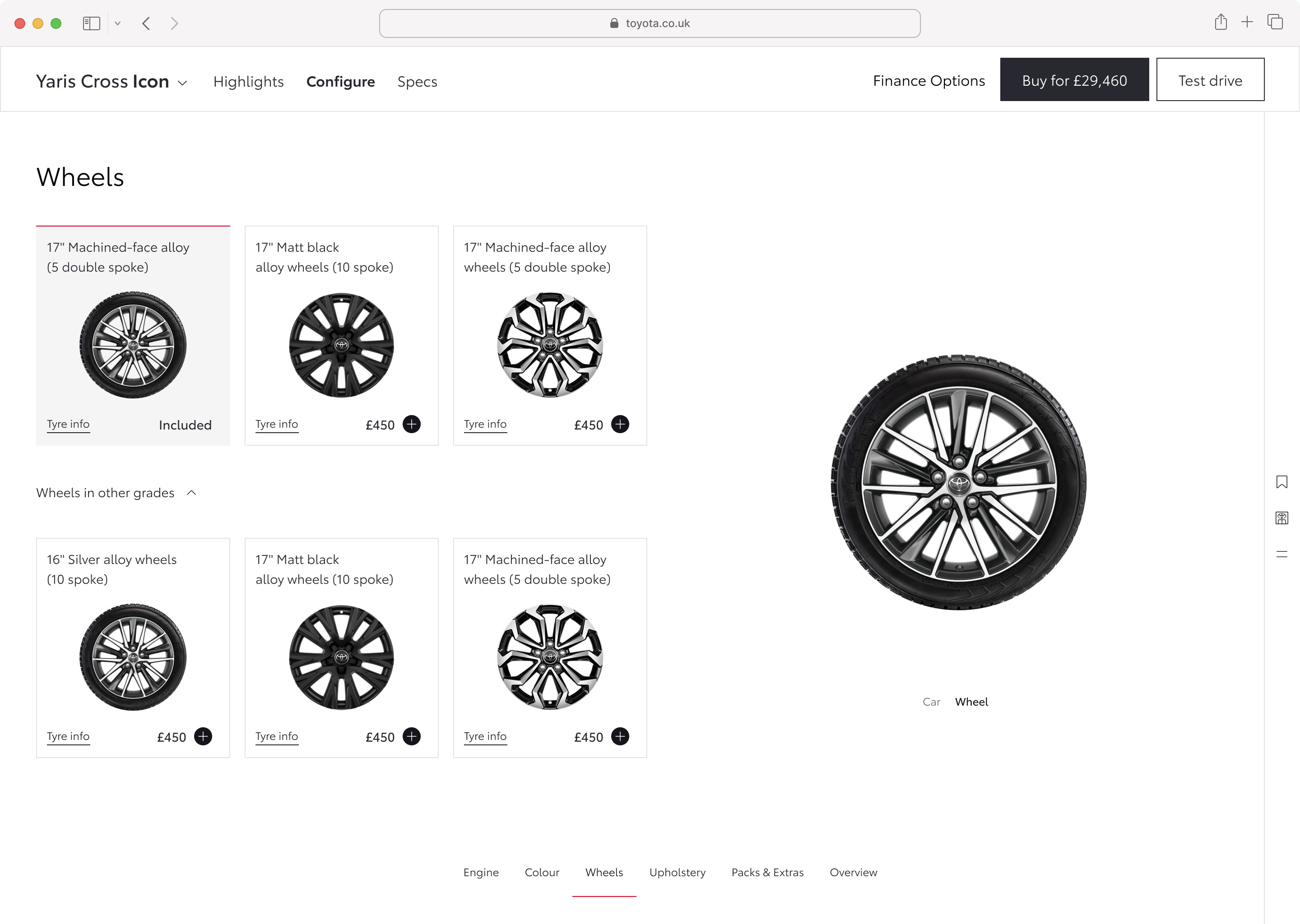
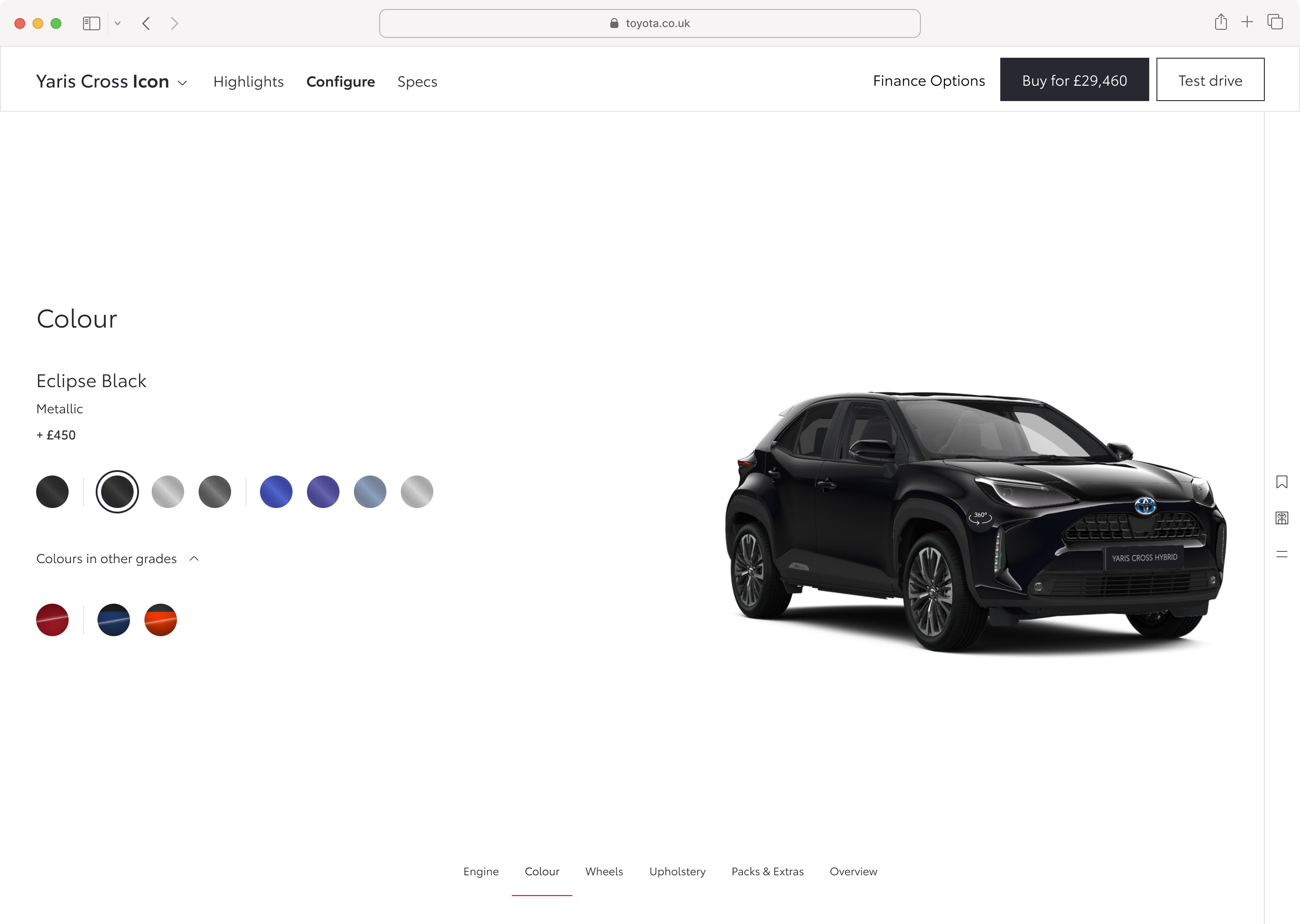
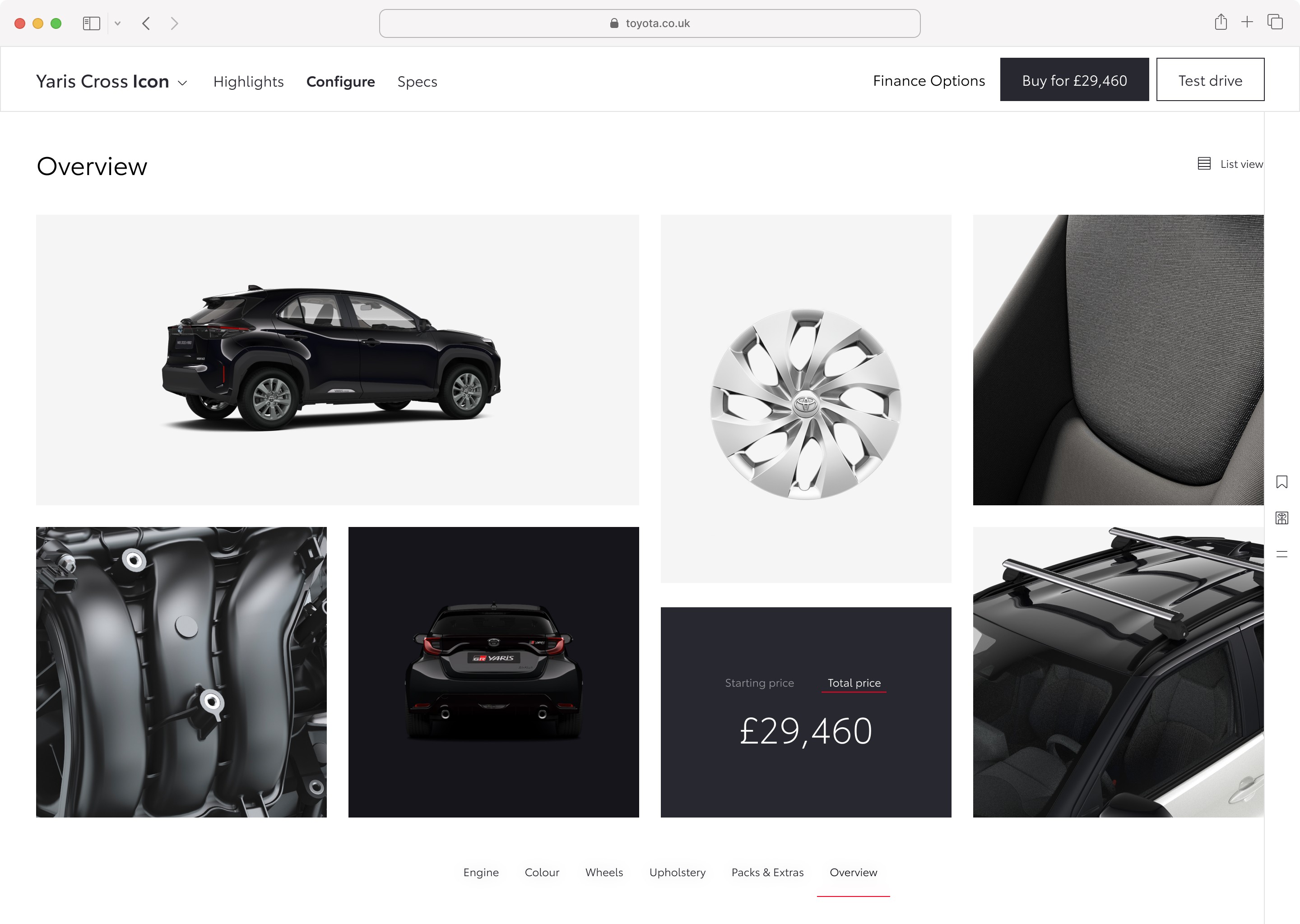
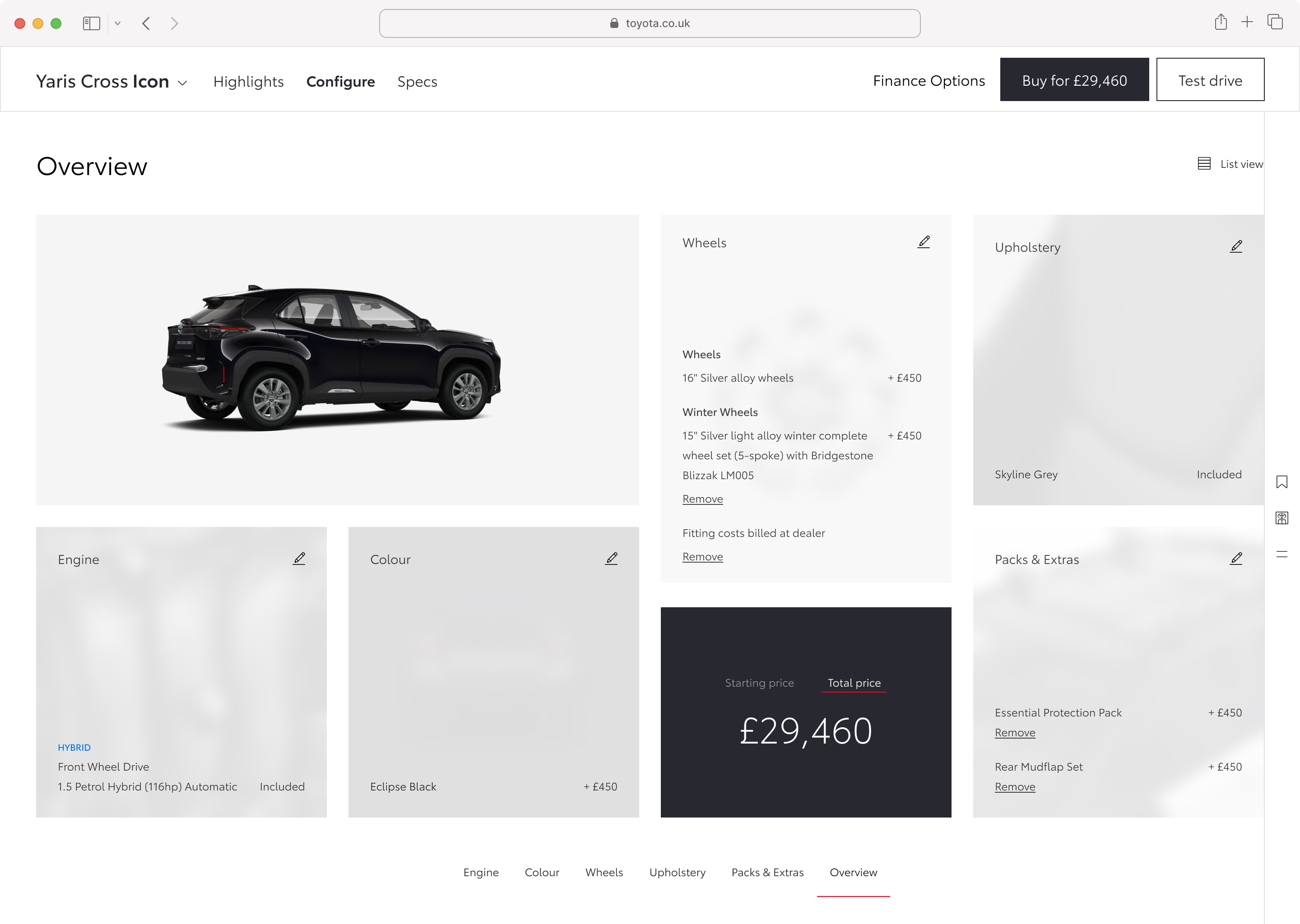
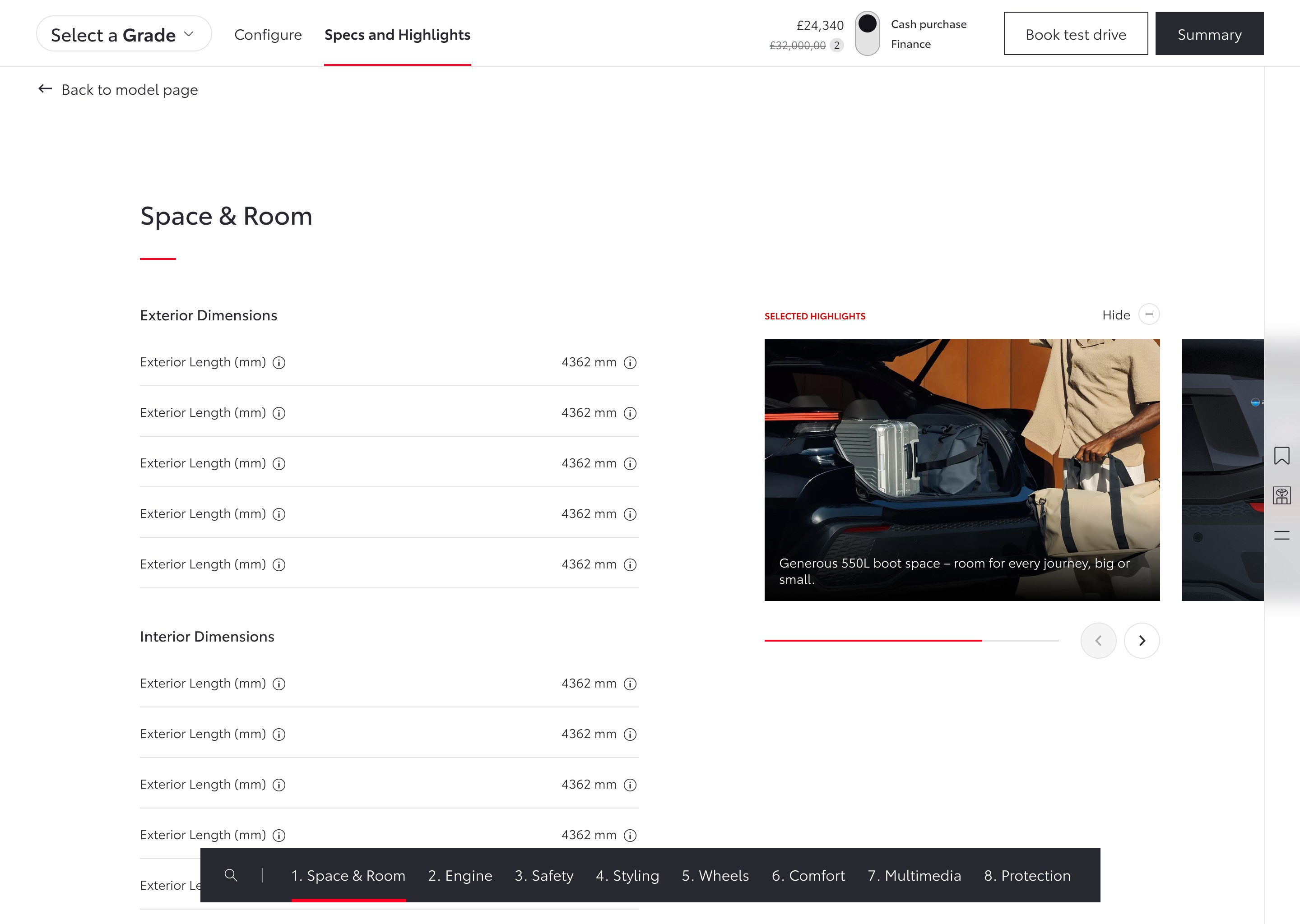
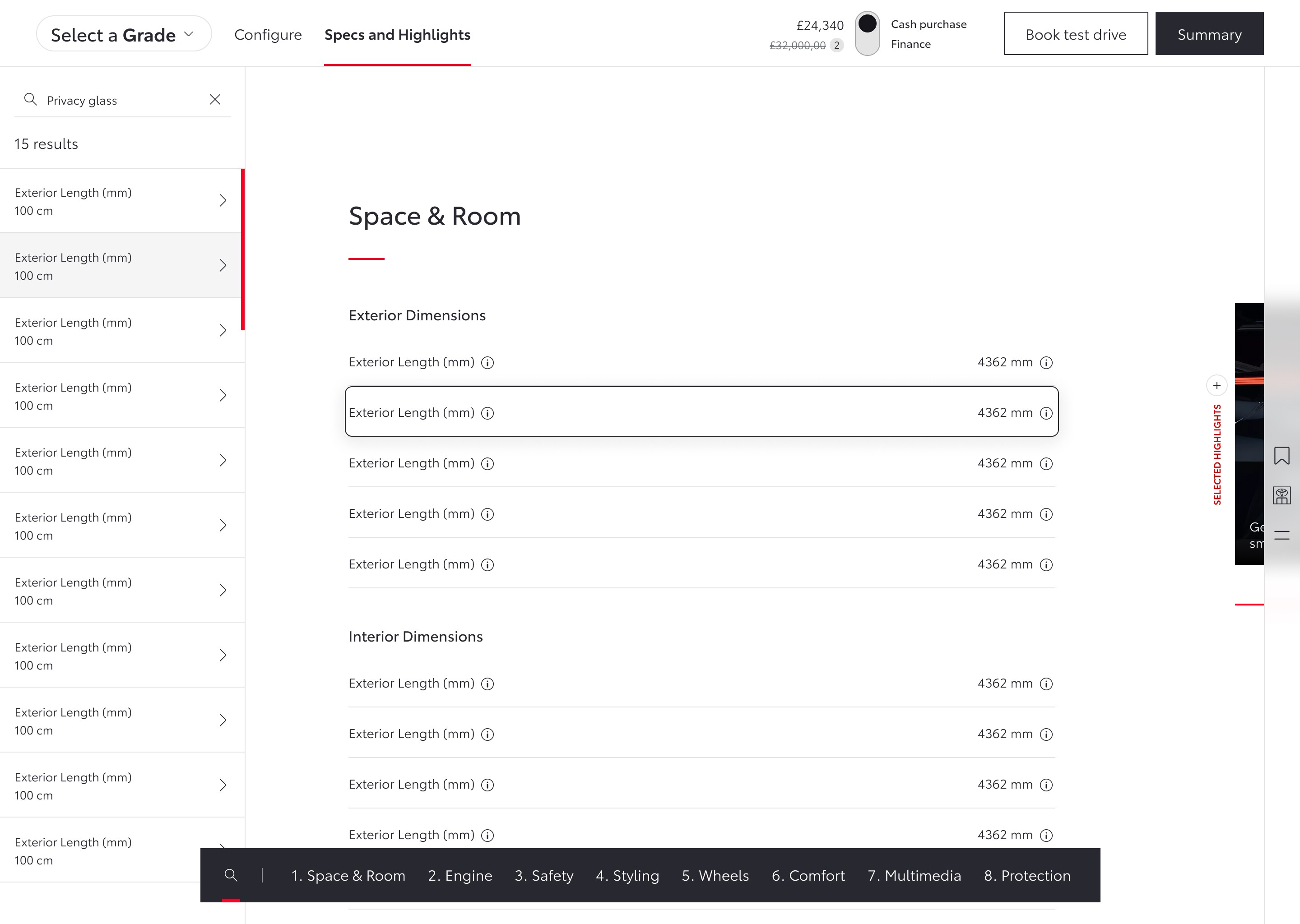
The result is the current Toyota EU configurator experience — a system that feels more intuitive, more visually coherent, and more confident. The flow guides users step by step without overwhelming them, while improved visual hierarchy and clearer comparison moments make decisions feel easier and more informed.
From a design perspective, the experience pushes the brand forward without breaking continuity — balancing Toyota’s established visual language with a more modern, refined interaction layer. And because the foundation is systematic, the product scales: new models, equipment packages, and market variations can be added without rethinking the core experience.
As team lead and senior product designer, I ensured that design quality, brand integrity, and usability were continuously protected, resulting in a solution that is both user-centric and strategically aligned with Toyota’s broader digital direction.
Reflection
The future of automotive configuration is about guiding people toward confident, meaningful choices through curated, lifestyle-aligned pathways rather than overwhelming technical detail. The experience must remain flexible and adaptive to rapid changes in mobility, technology, and regulation, evolving from a static tool into a dynamic, human-centered decision journey.
The work behind the work
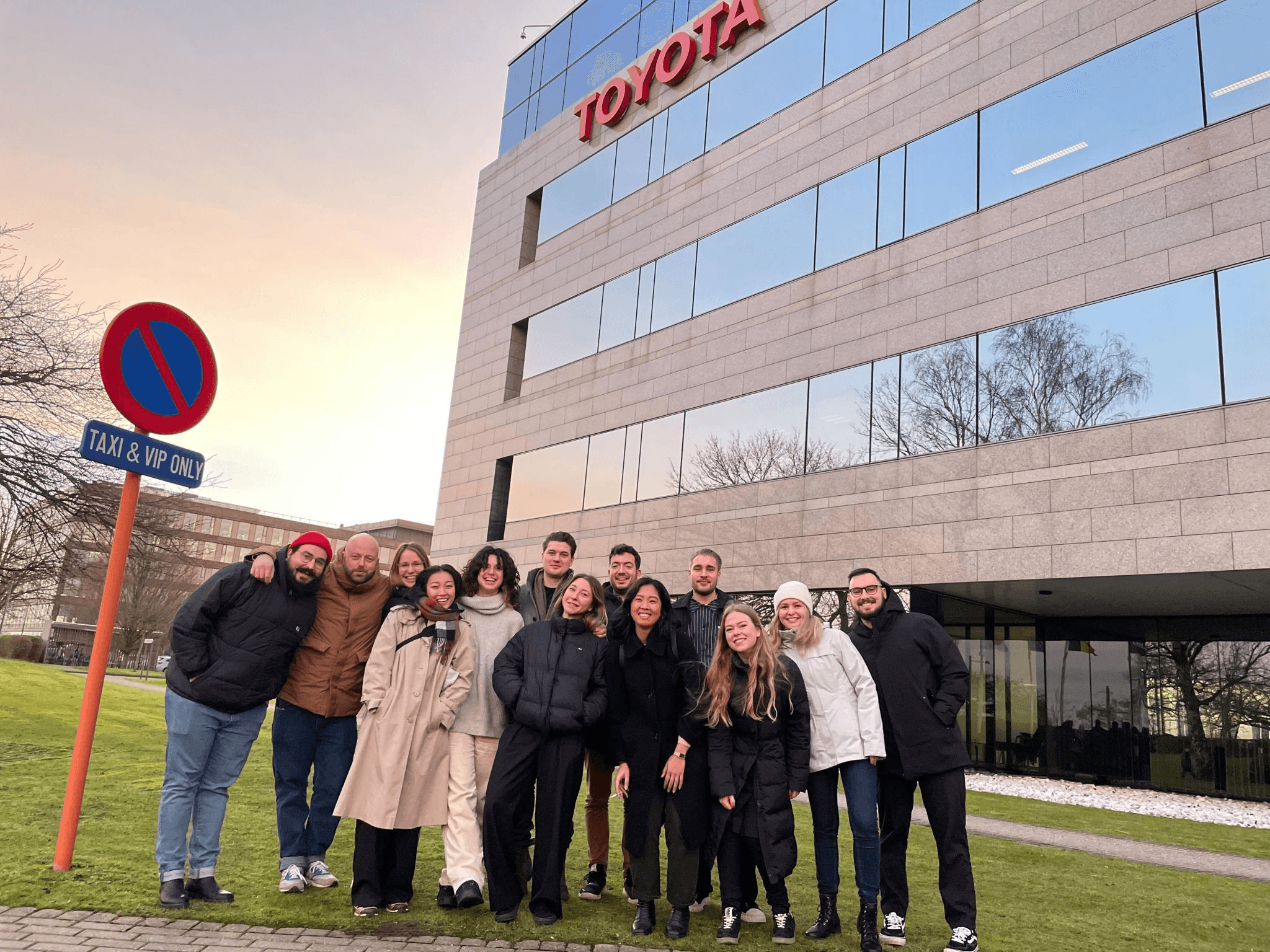
For the curious minds: how the sausage is made (but prettier). Process, decisions, prototypes, the whole thing.
Select a case study…